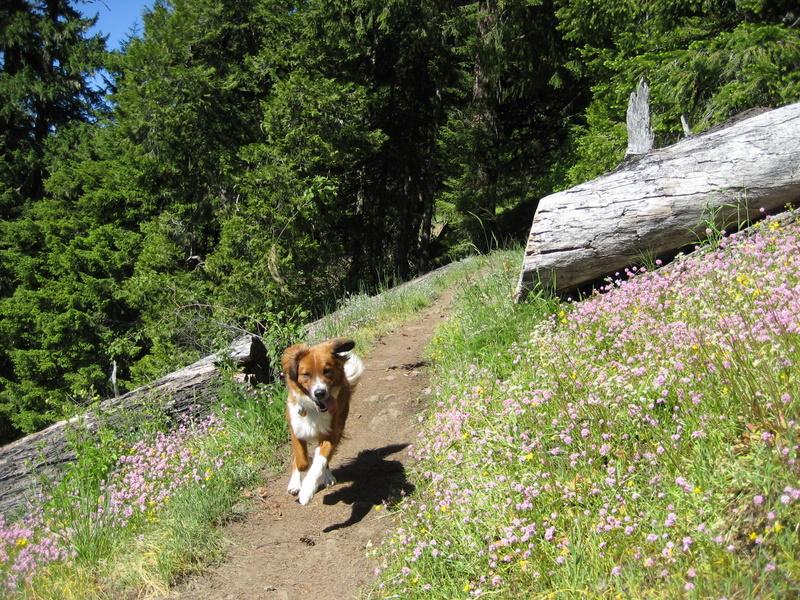
Surviving and Thriving through Adolescence
Key Topics
Signs your puppy is becoming an adolescent.
What do these changes look like in your day-to-day life?
Enter adolescence with a strong foundation.
How to thrive instead of just survive this stage of your dog’s life?
Be prepared for blips and know that they are normal!
Register for our Becoming Adolescent class.
Introduction
Mary and her 8 month old dog Cricket are out for their usual afternoon walk. Cricket is off-leash, noodling around the way she usually does on their walks. Suddenly a person appears in the distance and Mary calls Cricket. What happens next shocked her. Cricket, who has a great recall and usually responds right away when called, ignores her and runs up to the stranger.
Over the next few weeks, Mary notices that Cricket no longer responds to cues like ‘Sit’, she has started to jump up when Mary comes into the house, and if off-leash, wanders farther and farther away from Mary. What happened to her well-behaved puppy?
Around 7 – 9 months of age your puppy will enter adolescence. During this life stage, hormones will change their physical body, their emotional responses, and how they respond to you and the environment around them.
This post will give tips and games to help you both thrive through this stage of your dog's life.
Signs your puppy is becoming an adolescent.
Behaviours that you thought were well trained start to fall apart. You will stop talking about cute, cuddly, well-behaved, great recall, loves to be near me and may find yourself saying things like unruly, stubborn, mouthy, impulsive, reactive, naughty.
You may see a resurgence in:
Countersurfing and stealing objects
Destructive chewing
Excessive arousal
Exuberant greetings
Fear
House soiling
Decreased response to known cues
Reactive barking
Separation anxiety
Hormonal changes happening in your dog’s body, may bring on:
Increased independence (also described as stubborn!)
Higher energy
Urine marking, leg lifting, mounting
Roaming
Competitive behaviours between dogs
Increased desire to defend their territory
What do these changes look like in your day-to-day life?
As your young dog enters adolescence, they start to look like an adult which makes it easy to forget that they still have the mental and emotional capacity of a teenager. Understanding what to expect can go a long way to helping you navigate this life stage.
Your puppy may suddenly engage in higher arousal behaviours such as barking at dogs or people, pulling excessively on leash, leaving your side and moving farther away from you when off-leash, and exhibiting selective hearing that leans more toward not hearing than actually listening to any cues you might be giving.
At this age, the emotional responses from your dog aren’t really within their control, just like in human teenagers! As a result, when faced with a specific situation, your dog’s brain reaches for an emotional response and that response is often BIG and out of proportion to the situation at hand.
Enter adolescence with a strong foundation.
As a puppy owner, laying a strong foundation of basic skills before and during the early stages of adolescence can set you and your young dog up for a successful transition.
Focus on growing a foundation layer of:
Confidence
Management that keeps your dog from practicing behaviours you don’t want
Reinforcing wanted behaviours
Mental stimulation: games, puzzles, enrichment, trick training
How to thrive instead of just survive this stage of your dog’s life.
To thrive through this life stage, it is important to think about providing unpressured support that helps your dog feel secure.
When you are ready to throw your hands up in despair remember that your dog isn’t giving you a hard time, they’re having a hard time. Let this be your mantra over the next 18 – 24 months!
To navigate this life stage with your sanity intact and your relationship with your dog stronger than ever, check out these 5 tips:
1) Focus on growing concepts instead of obedience
During this life stage, the five most important concepts to grow in your dog are:
Confidence and Optimism: through easy wins, grow a dog who learns “I can do this!” and “it predicts good things for me”
Flexibility: ditch the routine to help your dog cope with changes in their environment
Proximity: as your dog becomes more interested in all of the amazing things the world has to offer, show them that being near you is always the better deal!
Disengagement: learn to ignore the world and see you as more valuable
Dimmer Switch: remind your dog that it doesn’t always have to be 0 to 100, there are always lower arousal choices
2) Back to basics
Grow calmness by reinforcing calm behaviour, utilizing passive calming activities such as scatter feeding, and stuffed Kongs, and making time for active rest. A calm dog is a dog that can make good choices.
3) Proactive management
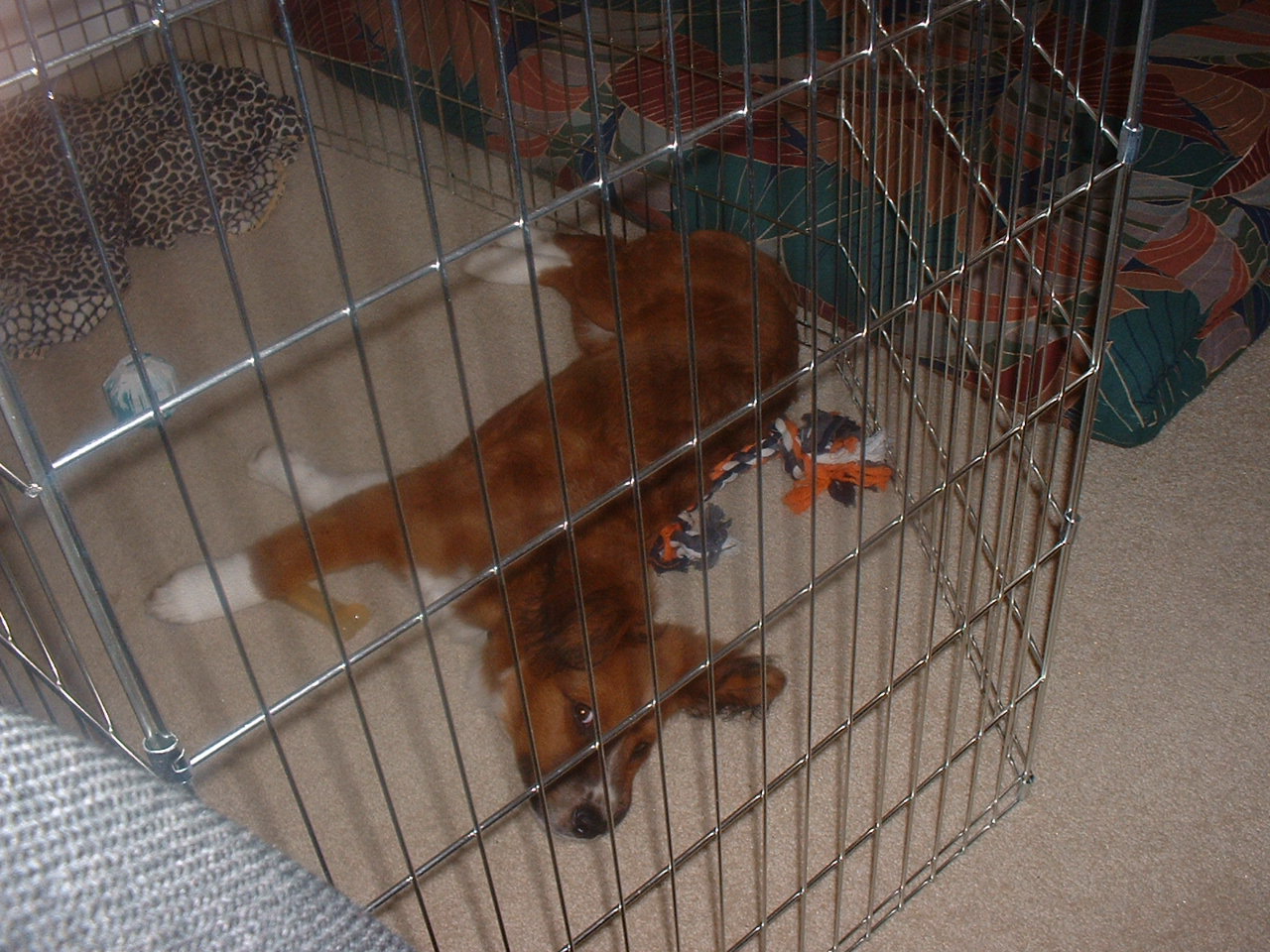
Prevent your dog from practicing behaviours you don’t like.
Does your adolescent dog jump all over people who come into your home? How about setting up the environment so that your dog can’t practice those undesirable behaviours.
Before guests arrive at your home, put your dog in their crate, ex-pen, another room, or on leash. Give them a long-lasting chew or food puzzle so they can be employed in a calm activity while guests enter your home. Your dog is practicing behaviours you want instead of rehearsing behaviour you don’t want.
4) Play Games
Games allow you to create a no pressure solution for your teenager.
Rather than focusing on growing obedience type behaviours, use this time to focus on your relationship. Play specific games that encourage growth of the concepts mentioned above, continue to provide clear expectations and boundaries through management, and give extra support when needed during any “blips” that might occur.
Games based training starts with learning and playing at home. You can train ‘for the situation’ before you put your dog ‘in the situation’. This type of training grows the skills you need so that when you find yourself in a situation, you both have the skill set to deal with it appropriately.
5) Focus on positive interactions
This is the time to grow your relationship. Think about your relationship as a bank account.
Minimize the withdrawals (negative interactions). Withdrawals can increase or escalate undesirable behaviour.
Grow the deposits (positive interactions). Strengthen your relationship, build value for you, and have fun together.
Be prepared for blips and know that they are normal!
What is a ‘blip’? A blip is the occasion when something goes wrong such as your dog making a choice you don’t like, or something bad happens to your dog.
By learning skills through the power of games you will be empowered to make good decisions for your dog, you will have the tools you need to avoid situations that lead to poor choices, and you will know what to do if you need to intervene to help your dog make a good choice.
Register for our Becoming Adolescent class.
Having an adolescent dog can be both challenging and extremely rewarding. So much depends on what you bring to the relationship both in terms of knowledge, interactions with your dog, and understanding.
To help you navigate this stage of your dog’s life, Proud of My Dog has put together a class just for owners of adolescent dogs.
Our Becoming Adolescent class is available both live on-line (year-round) and in-person (Spring – early Fall).
Find out more on our Upcoming Classes page.
Conclusion
There is a reason why so many young dogs are surrendered to shelters. The behaviour changes that occur during adolescence can overwhelm unsuspecting puppy owners.
Once you understand that these changes are normal, you can empower yourself with the skills needed to navigate the next few years with your relationship intact.
Having an adolescent dog can be a high energy, fun and exciting time once you know how to grow skills, and navigate the blips that are bound to occur.
References:
Dr. Chris Pachel, Adolescent behavior and development - FDSA 2020 Webinar
Absolute Dogs, ‘Beyond Puppyhood’ ebook. Click on the link to download the ebook for free.
Additional Resources:
Help! My Dog podcast: Ep 13: Adolescent Dogs, Relationship & A Runaway!
Kamal Fernandez blog post: Annoyingly Adolescent!
