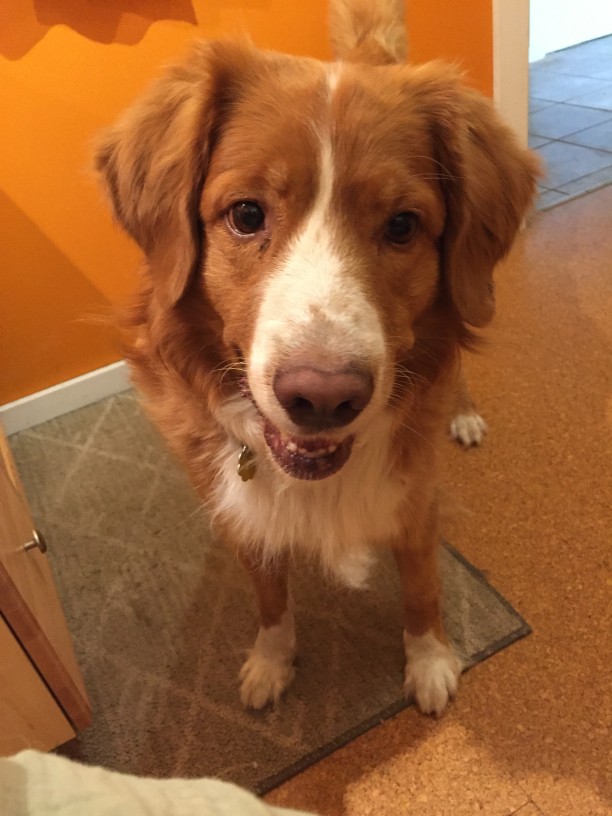
Do You Have A Velcro Dog?

Key Topics
The Impacts of Velcro Behaviour
Top Four Reasons Driving this Behaviour
How to Resolve this Struggle
Introduction
Does your dog follow you around the house?
Every time you get up your dog is right next to you. Off to the shower...there’s your dog, into the kitchen...still there, into the den, right by your side. Are they constantly asking for your attention or wanting to play?
At first (especially when your dog is a puppy) this might be kind of nice. Your dog clearly wants to be with you.
But, what if this behaviour is setting you and your dog up for struggles in the future?
A dog who can’t disengage from you may be unable to relax which will impact their emotions, and overall behaviour.
The Impacts of Velcro Behaviour
If your dog is unable to switch off from you and what you are doing, then they will struggle to relax. Without the ability to chill out away from you, their stress bucket is going to fill and stay full.
When you leave the house for a walk, a full bucket can impact your dogs ability to act appropriately around other dogs, people, and novelty. If your dog’s bucket is full, any excitement will push them over the top. As your dog’s arousal goes up, they become overwhelmed and you see behaviours like barking/lunging, spinning, jumping on you, or mouthing your arm.
These behaviours may not be happening because they feel a strong emotion about the thing they see but because of the stress they were feeling before leaving the house.
Top Four Reasons Driving this Behaviour
Dogs who exhibit the behaviour of following you around the house struggle to disengage from you due to a combination of four reasons:
1) Your dog has learned that your movement is very important. Your movement is a predictor of important events. You move to get the leash for a walk, to get food, to play, to leave the house. You move and your dog jumps up to follow because they are predicting something important is about to happen.
This prediction leads to a vicious cycle of movement = something important.
The anticipation associated with your movement constantly adds something to their bucket making it difficult for them to relax.
2) Your dog thinks your presence in the house is important. Because access to you becomes important, your presence also becomes important. This pairing means that your absence is a loss.
Your dog loses access to you and therefore to important things. This loss can become something to be feared creating a foundation for separation struggles!
3) Your dog may struggle to disengage from you in the house. Their ability to disengage may drive an obsession with you, where you are, and what you are doing when you are home.
4) They don’t know what else to do. This is more likely with puppies and dogs new to your home. They don’t yet know what choices they should be making in a given situation. Where should they be (on the couch, the floor), what should they be doing.
This uncertainty leads them to following you around the house. When in doubt, stay near my person.
How to Resolve this Struggle
Your movement isn’t important. Start practicing purposeless movement. Stand up from the couch, sit back down. Stand up, walk toward the kitchen, turn around and sit back on the couch. Walk toward the door, stand there, walk away. Make your movements meaningless to your dog.
Feed the spot. If your dog follows you, get one piece of food and go back to where they were laying down and put the piece of food there (feed the spot).
Dogs are creatures of efficiency and will learn that it is better to stay put because that is where the value (food) shows up.
Practice presence doesn’t mean access. Teach your dog that not having access to you throughout the day is a good thing.
Put your dog in their crate throughout the day (or behind a baby gate, in an x-pen, in another room etc). Pair being confined with a yummy chew or lickmat. You want to grow lots of value for being in their confinement space.
As you grow “time in” confinement and combine that time with meaningless movement, including being absent from the room, your presence will be less important to your dog. The more your dog practices calm confinement they will start to understand that your movement is unpredictable and access isn’t always guaranteed, and that’s normal, so they can switch off and relax.
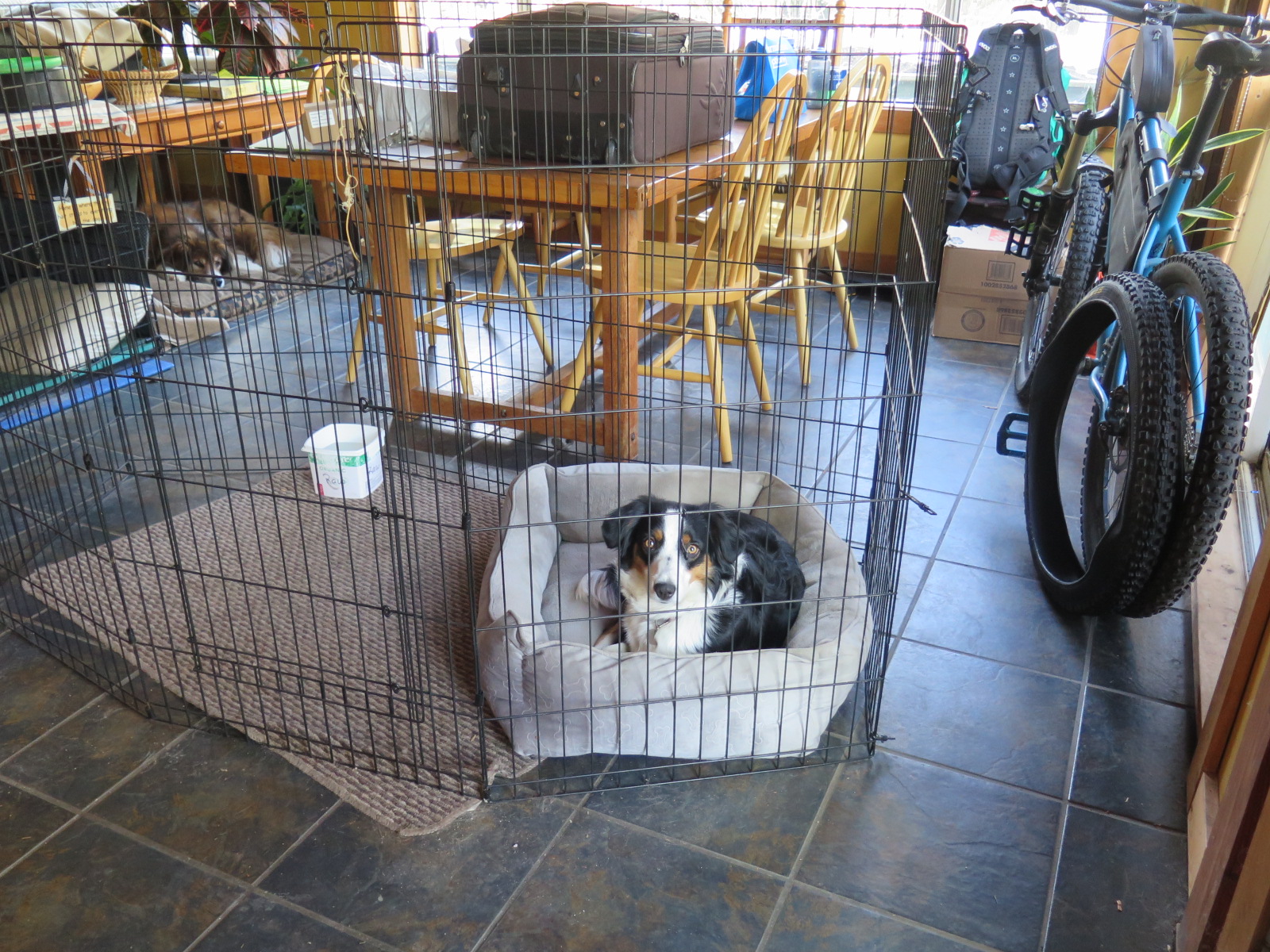
‘Presence doesn’t mean access’ grows your dog’s confidence, and enables calm disengagement.
Build disengagement. Play disengagement games to help your dog grow their disengagement skills. The more your dog can learn to disengage from anything in the environment, including you, others in your household, sounds, and movement, the easier it will be for them to relax anywhere.
Establish that you are none of their business. Set up situations in the house where they are engaged with something else that isn’t engaging with you. Combining this activity with confinement works wells. Give your dog a long lasting chew, a stuffed Kong, or a lick mat. You could also use these enrichment type activities outside.
If you are working in your garden, put your dog on a long leash, and give them a long-lasting treat. They are doing something independent of you which teaches them that there are times when you are none of their business.
When your dog works on a long-lasting chew, it helps make your movement less important because they are disengaged from what you are doing.
Every time you move and they don’t get involved with you, it is one step closer to helping them switch off and relax in your presence.
Teach them what to do. Grow Boundary Skills. Teach your dog to relax on a mat, dog bed, crate, or couch. This teaches your dog what you want them to do when you are home.
Boundary training is also helpful when you go to a friends place or an unfamiliar environment.
By making it clear where you want them to be and what you want them to do, you can grow their confidence and understanding of what is expected. That understanding will allow them to relax anywhere.
Conclusion
A Velcro dog might be cute but it can lead to a variety of struggles. By using boundary games, disengagement games, presence doesn’t mean access protocol, and purposeless movement, you can teach your dog to calmly relax regardless of your presence in (or absence from) the house.
Reference:
Adapted from the Help! My Dog Podcast Ep 129 Help! My Dog Won't Leave Me Alone
Additional Resources
Learn more from Proud of My Dog. Check out our Upcoming Classes webpage for dates and times.
