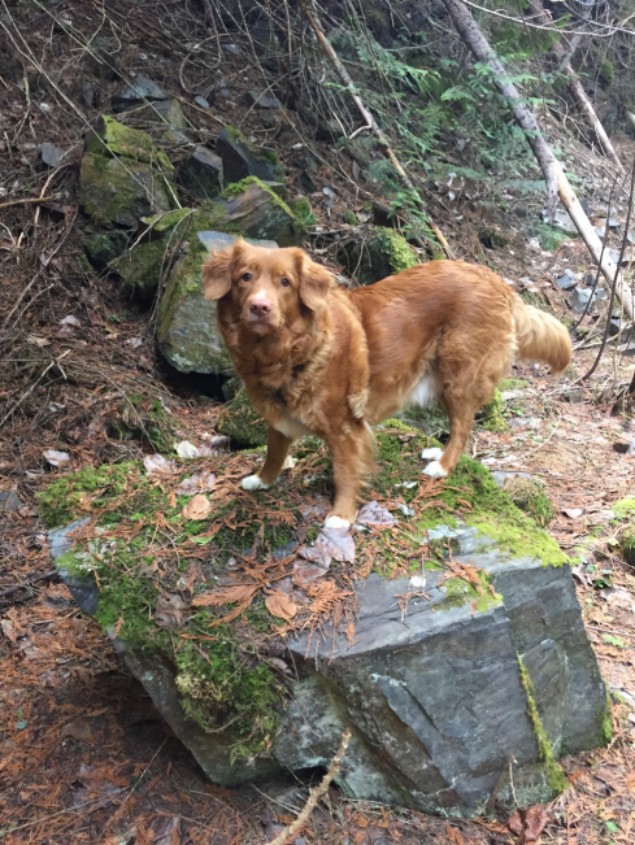
But My Dog KNOWS That!
Key Topics
Introduction
What does it mean for a dog to generalize?
How do you help your discriminating dog to generalize?
Pointers to set your dog up for success
Introduction
Have you ever found yourself saying "But My Dog KNOWS That!"
If yes, you are not alone. It is a common lament from dog owners. You ask your dog to sit when you are home and he aces it! You then take him to the park, cue the sit, and nothing happens. Your dog is happily bouncing around the grass, jumping up on your friends and strangers, and you are yelling ‘sit, Sit, SIT, SIT’ to no avail.
Is your dog being disobedient, stubborn, or worse yet dominant?!
Actually no. Your dog is just being a dog and dog’s must be taught to generalize.
What does it mean for a dog to generalize?
Generalization: the ability to apply a concept to a situation different from the one it was initially learned in.
This is second nature us. When you learned to write, you didn’t have to relearn the process when you went from school to home, changed from lined paper to blank paper, or switched from pencils to pens.
Humans generalize more easily than they discriminate.
Discrimination: the ability to focus on the details.
Dogs are master discriminators. “Sit” doesn’t necessarily mean “put your bottom on the ground” to a dog. Sit may mean “Put your bottom on the ground when you are by the door, facing mom, and she has a treat in her hand.”
Dogs discriminate more easily than they generalize.
Dogs must be taught that what they learn in one room, applies to all the rooms in the house, to the backyard, the front yard, the street, and the park.
How do you help your discriminating dog to generalize?
You introduce variety when you practice a game or a skill. Some of the ways to do this include:
Changing your dog’s position relative to you. Does your dog always sit in front of you? Can your dog also sit beside you or behind you?
Changing your physical position. Practice the behaviour while you are standing, sitting, lying down, kneeling, or doing yoga.
Practicing in different locations. Different rooms in the house, front yard, back yard, in the park, the vet’s office, etc.
Training on a variety of surfaces; grass, carpet, shiny floors, gravel, pavement, and concrete, wooden bridges, docks, etc.
Once your dog can generalize a few behaviours, you'll find that all subsequently taught behaviours tend to generalize more quickly. That is, when you cue a known behaviour in a new environment, your dog will understand that it is the same behaviour and be better able to respond as you expect.
Pointers to set your dog up for success
A few pointers to help you set your dog up for success when you start to generalize a behaviour:
In a new environment, play games to lower your dog’s arousal so they can engage with you. Games such as Pattern Walking, Two Paws On, and Orientation Game are great for growing your dog’s ability to focus on you in new environments. Once they are able to engage with you, they will be better able to respond to any cues you give.
Don’t expect perfection the first few times you ask for a behaviour in a new location. At first, reinforce your dog for offering the behaviour even if it is sloppy. The behaviour will improve once your dog realizes that you are playing the same game.
Conclusion
Understanding why your dog may not be listening to you will help you find positive solutions to this struggle. Playing games to bring down their arousal in new environments will make it easier for your dog to engage with you.
Additional Resources
Check out our Upcoming Classes webpage for dates and times.
Watch this excellent video by That Dog Geek called Why Dogs DON'T LISTEN Around Distractions
Listen to the Help My Dog Hub podcast: Ep9: Getting Your Dog to Listen to You
